Genentech scientist brings cutting-edge AI course to SFSU
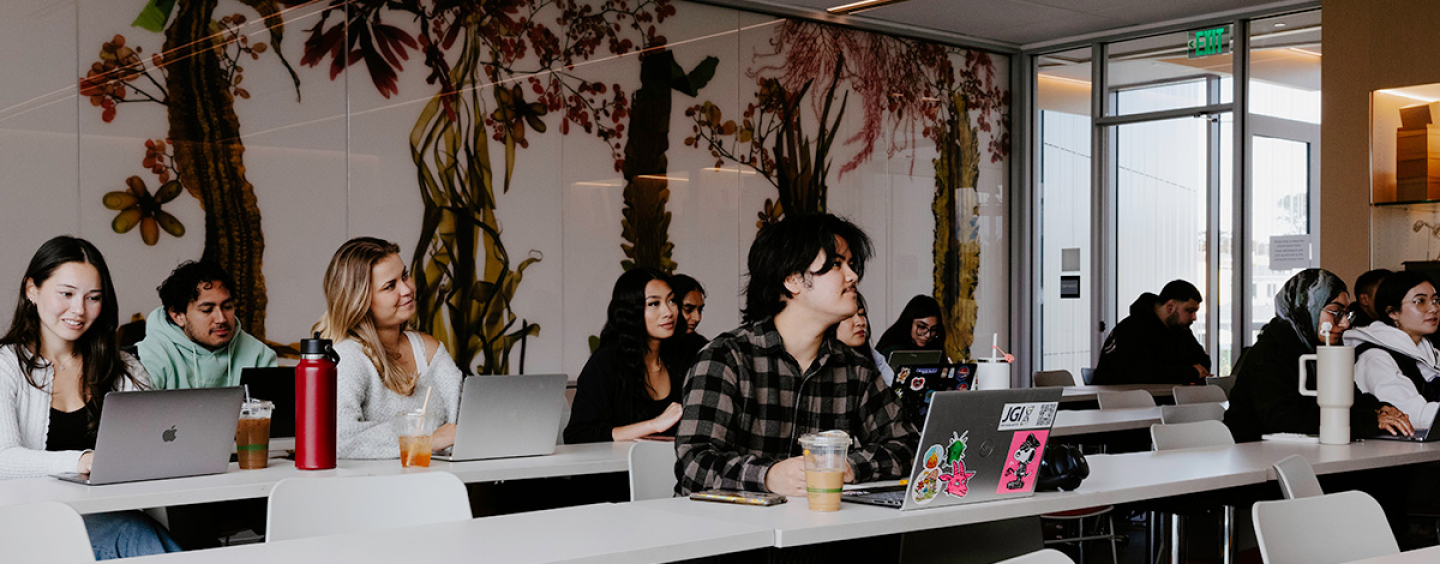
New class introduces students to protein modeling and deep learning for biotech research
After hearing the positive things colleagues had to say about San Francisco State University’s Promoting Inclusivity in Computing (PINC) program, Genentech scientist Will Thrift reached out to PINC Director Anagha Kulkarni with a proposal: collaborate on a course focused on protein artificial intelligence (AI). The result is “CSC 511: Protein Modeling with Deep Learning,” now giving SFSU undergraduates the opportunity to learn from a working Genentech scientist.
Taught by Thrift, the class launched in the spring of 2026. Undergraduates learn the fundamentals of deep machine learning (an AI approach that trains computer models to recognize patterns in complex data) as it applies to protein systems, protein property predictions, protein folding, generative and discriminative models, and more. Since many diseases originate from proteins misbehaving, AI can help predict how a protein may malfunction and support drug discovery.
“Protein modeling with deep learning is as cutting edge as it gets. And we get to have an industry practitioner — someone who knows the theory and practices the science — craft and lead the development of the course,” said Kulkarni. As a Computer Science professor and associate chair, she’s an expert in machine learning. But protein AI isn’t her area of expertise.
“My reaction to CSC 511 was excitement,” said Psychology senior Akemi Smart. “I felt proud that I was taking it. The school wanted me to succeed, and that’s a theme I felt throughout the PINC program.”
CSC 511 completes the sequence of classes required for the PINC minor and Data Science and Machine Learning for Biotechnology certificate. The PINC umbrella — programs and classes designed to make coding accessible for life science undergraduates — also includes a summer program, a scholarship, professional development opportunities, peer mentors in every PINC class and a comparable data certificate for professionals.
Although CSC 511 students can add skills like PyTorch (a popular platform for building AI models) and protein modeling to their resume, Thrift wanted students to walk away with more.
“Students are learning a mindset rather than a particular set of skills in the class. Especially in deep learning, things are moving so quickly that the specific things you learn in class are probably not what you’ll do day to day,” Thrift explained. “My goal with the class is to give students the mindset to not be fearful of topics and to really engage with them.”
CSC 511 just launched but it has already had a ripple effect on the PINC program. Although machine learning has been a part of PINC since the beginning, Kulkarni says CSC 511 underscores how the evolution of machine learning and AI can outpace standard university curriculum development.
“The role us educators play now is slightly different. We must give our students skills that are immediately usable,” Kulkarni said, explaining that PINC faculty will update other classes to better match CSC 511. “These kinds of partnerships really help us make that transition. I feel this needs to happen more and more.”
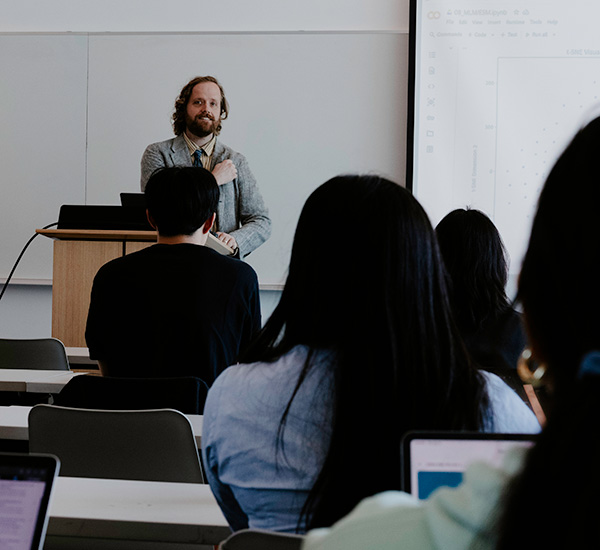
Genentech scientist Will Thrift teaching students.
Over the years, SFSU’s partnership with Genentech has helped PINC do just this. Company scientists have visited and taught PINC classes and seminars, participated in professional development training, networked with students, provided Genentech tours and more. PINC graduates have found new career paths, enrolled in graduate programs and gone on to academic and industry internships and jobs — including some at Genentech.
“I want to go into the biotech or health care industry, which I never thought about before. It’s because of the passion of each Genentech employee we’ve spoken to,” Smart said. After graduation, she’ll start a master’s program in Communication Data Science at the University of Southern California. She plans to return to the Bay Area to start her career.
“It’s a big advantage to have the PINC program in San Francisco considering how big of a biotech hub is here, how innovative it is and how many startups there are. We’re an amazing city to start your career, to get your education. There are so many opportunities,” Smart added. “Programs like PINC are possible because of our location.”
PINC Managing Director Michael Savvides encourages students to join PINC as early as freshman year. “There is a large segment of the student body that thinks coding is too hard [and] impossible to learn. But we have successfully proven through several cohorts that you can enter this program and learn even if you have zero foundation in coding,” he said.
Tags
Related News