SFSU announces winners of its first-ever student AI awards
Participants highlight ethics, innovation and human impact in their projects
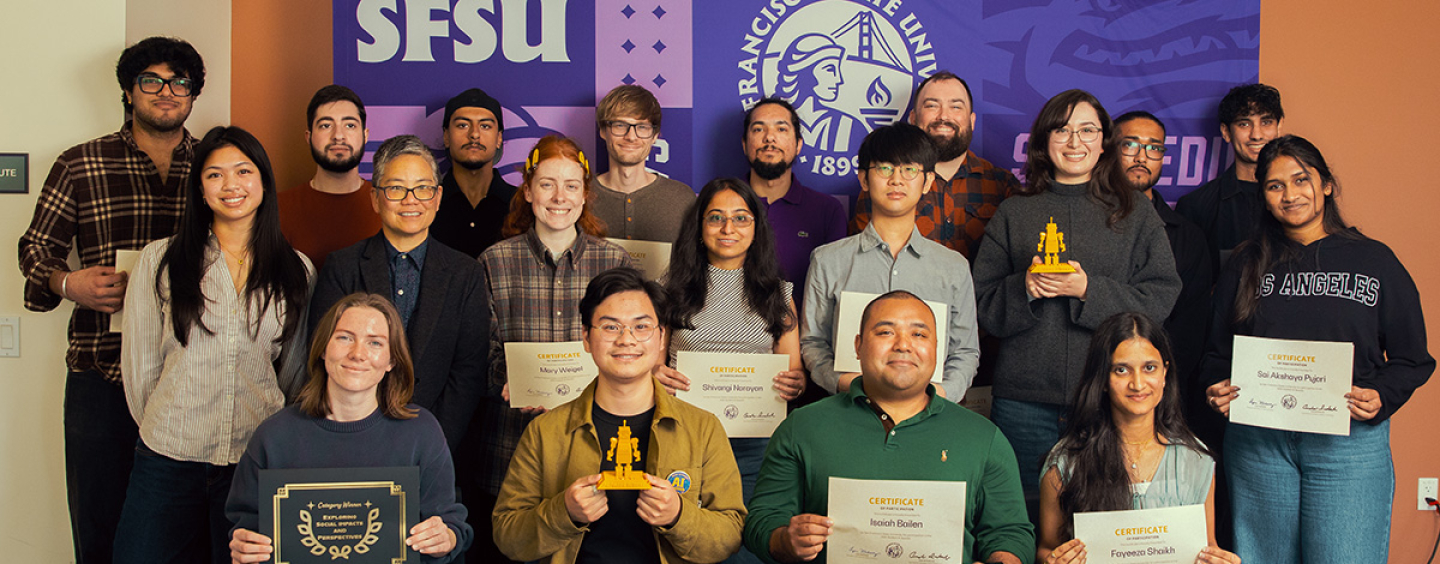
San Francisco State University recently recognized the winners and participants of its first Student AI Awards, which showcased student projects that explored the possibilities and implications of artificial intelligence across disciplines.
The awards, presented May 5, celebrate original student work that engages AI through innovation, critical analysis and real-world problem solving. This year’s winning projects reflect a range of approaches, from examining bias in AI systems to building tools that improve workflows and support workers.
Among the winners is Claudia Wormley, a Software Engineering student, whose project, “Encoding Inequality: How Social Prejudice is Passed into AI,” earned recognition in the Exploring Societal Impacts and Perspectives category. Her work examines how artificial intelligence systems can reinforce inequities.
“My project explores how artificial intelligence systems inherit and amplify the systemic biases that exist in society,” Wormley said. “AI models are trained on historical data that reflects patterns of prejudice, discrimination and exclusion.”
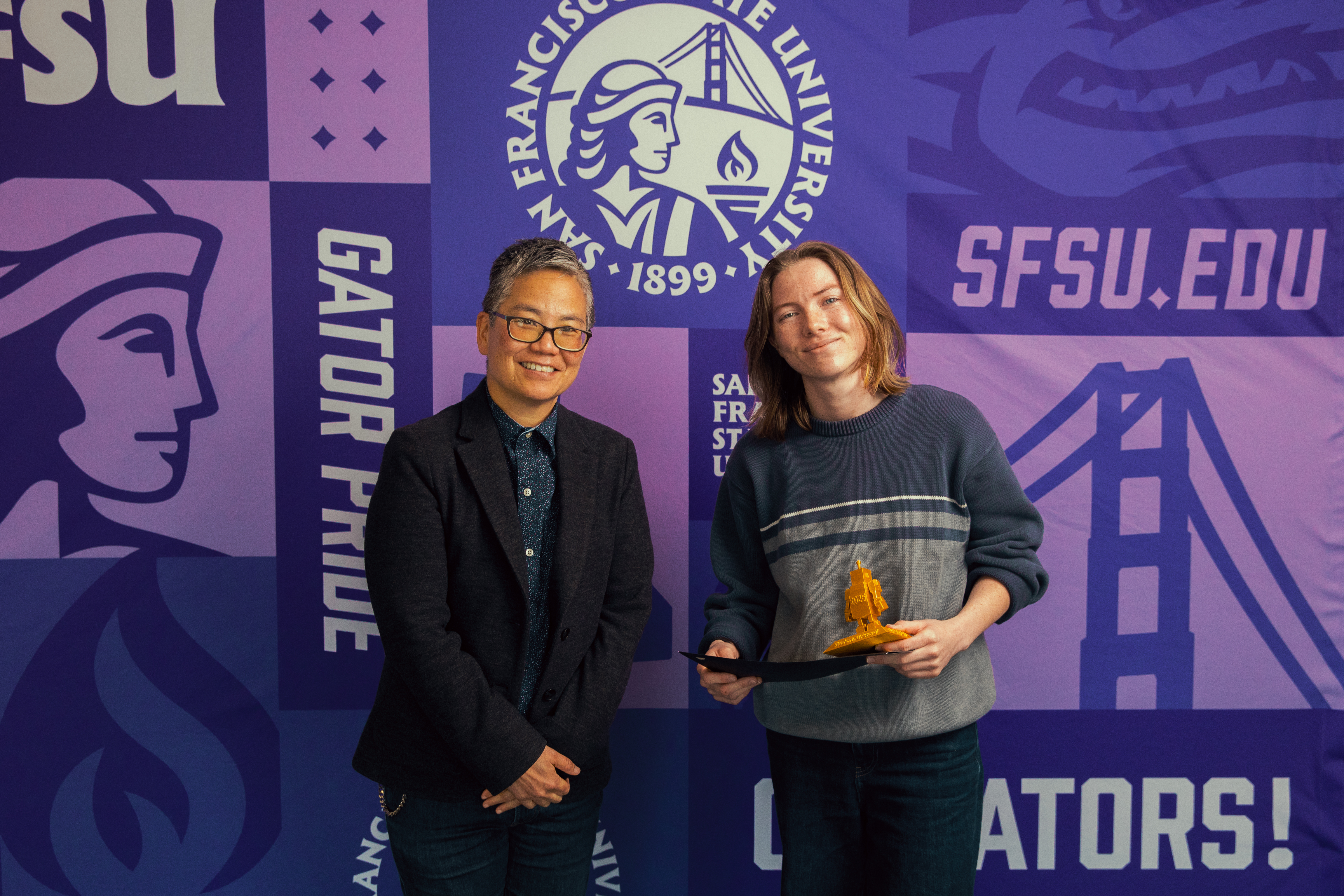
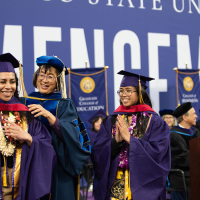
Provost Amy Sueyoshi (left) pictured with Claudia Wormley
Wormley said her research highlights the urgency of addressing bias as AI becomes more embedded in everyday systems. “Through my paper, I wanted to highlight the urgency of this harmful design and emphasize the need for policy and regulation to reduce the harmful impacts of AI bias,” she said.
She traced her inspiration to investigative reporting on algorithmic bias in the criminal justice system. “It was incredibly impactful seeing the blatant racial bias the audit revealed,” Wormley said. “This was the first of many cases I discovered in which biased AI was being implemented in critical spaces reinforcing existing inequalities against already vulnerable groups.”
Wormley said her academic experiences shaped her perspective on responsible technology. “I feel a responsibility to understand and critically examine the role AI plays in society,” she said. “As I prepare to enter the professional world, I want to prioritize responsible development and advocate for technology that serves the public interest.”
She encourages other students to approach AI thoughtfully. “AI can be an incredibly powerful tool, but it should enhance your abilities, not replace them,” Wormley said. “I also encourage students to focus on developing the kinds of skills AI can’t easily replace, like critical thinking, creativity and empathy.”
Student recognized for innovation
Within the Student AI Awards’ Innovation category, the winning project, "Shipyard,” highlights how AI can support innovation and entrepreneurship. Developed by Kareem Amin, the platform streamlines hackathon management, improving submissions, judging and event operations.
Since its launch, Shipyard has supported more than 1,000 users and nine hackathons, including SFSU’s annual SFHacks. Amin said his experience attending hackathons inspired him to build a more consistent system. “I kept seeing the same problem over and over again, which was that hackathons were just really inconsistent with each other,” he said. “So eventually I was like, ‘OK, I’m going to fix this.’”
Amin said AI became a key part of both building and growing the platform. “There is a lot of baggage with AI, and it can be good or bad, but I think a lot of it comes down to experimentation, preferably in low-stakes environments,” Amin said. For Amin, the value of AI lies in how it supports outcomes rather than replaces human judgment.
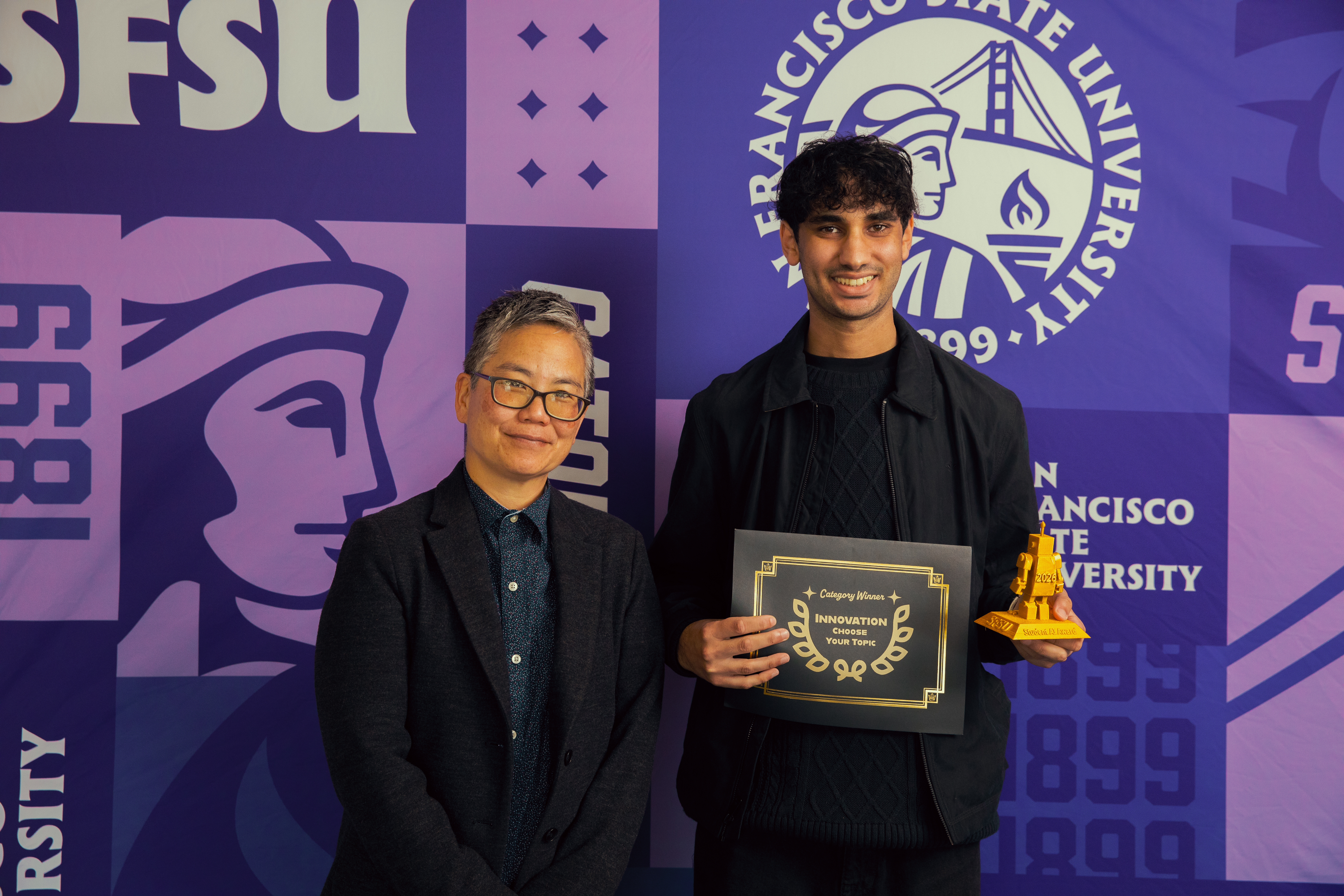
Provost Amy Sueyoshi pictured with Kareem Amin
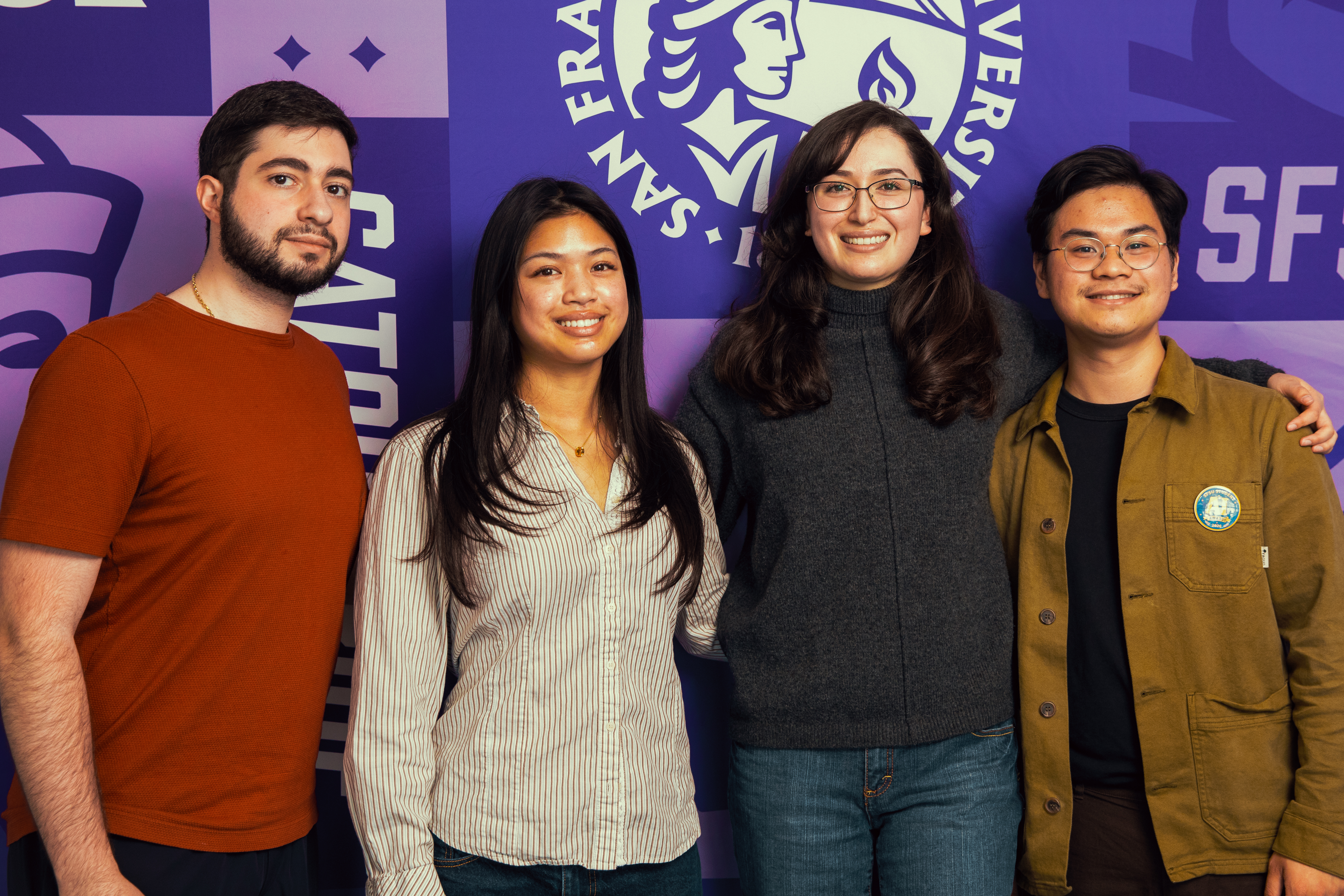
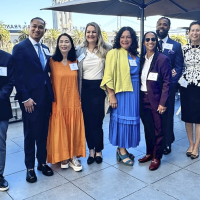
Arman Daghbashyan, Kataliya Sungkamee, Giovanna Gomez and John Tatlonghari
'AI that enhances human capabilities'
The third winning project, in the awards’ Problem Solving with AI category, “BlueCore AI” focuses on improving working conditions in high-pressure environments. The project was developed by Kataliya Sungkamee, Giovanna Gomez, John Tatlonghari and Arman Daghbashyan.
“BlueCore AI is a human-centered AI prototype designed to support maritime workers by reducing administrative burden and improving operational well-being,” Gomez said. “We approached AI as a support system that enhances human capability rather than replacing people.”
The project emerged through SFSU’s participation in the SUGAR Network, which connects students with industry challenges. “We were introduced to challenges within the maritime industry, particularly fatigue, workforce decline and operational strain,” Gomez said. “That pushed us to explore how AI could reduce invisible administrative stress while still keeping human needs, safety and decision making at the center of the solution.”
Gomez said her studies in Information Systems shaped the team’s approach. “My coursework has taught me that technology is not just about systems or automation, it is also about people, processes, ethics and implementation,” she said. “That perspective shaped how we designed BlueCore AI.”
Teammate Kataliya Sungkamee said the project also influenced her academic and career direction. “This project genuinely shifted everything for me,” Sungkamee said. “That full ownership showed me exactly what I love to do: design thinking.” She added that working with AI accelerated both the project and her own growth. “It pushed me to find and learn tools I’d never touched before and to immediately show up as a self-starter,” she said.
Sungkamee encouraged students to engage with AI intentionally. “The goal isn’t to work alongside AI like it’s a coworker doing half the tasks,” she said. “It’s to use AI as a way to push your own growth forward faster than you could on your own.”
Gomez also emphasized the importance of understanding AI’s broader capabilities. “People hear the word ‘AI’ and often reduce it to chatbots or automation, but AI has the ability to process massive amounts of information, recognize patterns humans might miss and help uncover insights,” Gomez said.
For students hesitant to engage with AI, Gomez offered a direct message. “AI is not going anywhere,” she said. “In many ways, it acts like a tool for amplifying human understanding.”
Reflecting on the technology’s role, she added, “AI should be viewed as a tool for augmenting human capability and decision making, not simply as a replacement for human work.”
For Andrew Roderick, assistant vice president of Academic Technology, the program’s first year underscored the range of student thinking on AI.
“The awards showed us that SFSU students bring a lot to the table and do not think monolithically about AI. The breadth of submissions was amazing, and we know there is more great student thinking centered on ethics, innovation and human impact that we want to surface for next year’s awards. It really underscores the incredible talent SFSU is sending into our communities and workforce.”
All the projects submitted to the first annual SFSU Student AI Awards are available on the SFSU’s AI website. You can also view the entire AI Awards Ceremony on YouTube.
Tags
Related News