Gator filmmaker’s latest work featured in Wild and Scenic Film Fest
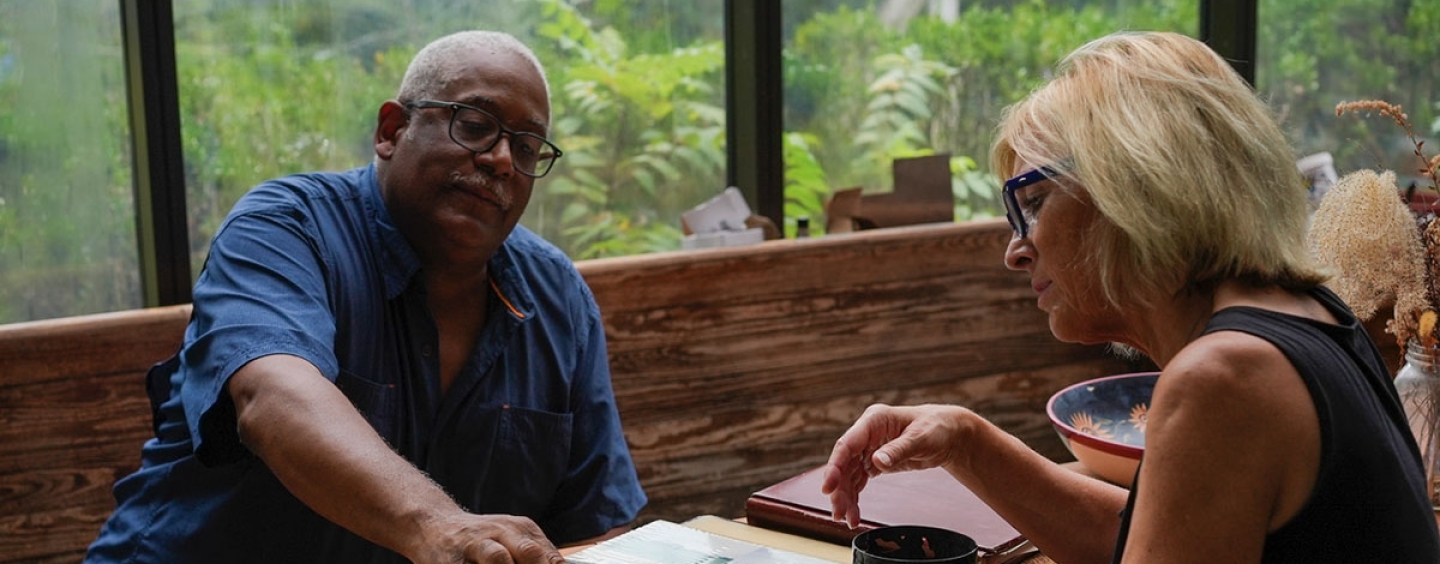
Director and producer Maggie Stogner talks to CEO of Patuxent Riverkeeper Fred Tutman about how clean water and environmental justice.
SFSU helped launch alumna Maggie Stogner’s documentary film career
More than four decades after studying at San Francisco State University, documentary filmmaker and producer Maggie Stogner (B.A., ’79) is still telling urgent environmental stories. This month, her documentary about water justice, “Upstream, Downriver,” will be screened at the Wild and Scenic Film Festival in Nevada City, a five-day festival (Feb. 19 – 23) that celebrates environmental activism and nature in film. For those who can’t make the trek to Nevada City, her film is available to stream through Kanopy.
Stogner’s film commemorates the 50th anniversary of the Clean Water Act. It documents the work of community activists across the country fighting for water justice. This is one of several films she created while serving as the executive director for the Center for Environmental Filmmaking at American University in Washington, D.C., where she also teaches.
Her interest in conservation dates to her childhood in Berkeley. Her parents were activists, especially for clean water. Her mom, whom Stogner calls a “water warrior,” would speak out at city council meetings. Her parents even pulled her and her sister out of school for a week so the family could help wildlife injured in the 1971 San Francisco Standard Oil spill. The cries of the injured birds are still ingrained in Stogner’s memory.
“This was the first time I realized how fragile nature was, and I don’t think I could articulate it at that age,” she said. “That’s why I make these films, because [nature is] fragile, and we as humans have a stewardship responsibility to take care of our beautiful planet.”
It was also around this time that she developed an interest in photography. After Stogner transferred to SFSU, that passion spilled over into film. “The courses that I took at SFSU helped me see film in a larger light,” she said. “That got me thinking in a different direction, beyond photojournalism, that documentary storytelling can really change minds and hearts.”
A few years after graduating, Stogner pursued documentary film more seriously, enrolling in Stanford University’s documentary film program. After earning her graduate degree, she worked as a freelance film editor and pursued independent projects, then was hired by Apple Computer to create videos in its communications group. Later she launched a multimedia company in Oregon.
In 1995, she received a call from a film school friend working at National Geographic TV & Film about an opportunity for the summer. She couldn’t say no to National Geographic. So, she moved to D.C. with her family. The summer contract turned into ten years on staff at National Geographic where she traveled around the world making films and supervising many of NatGeo’s expedition films.
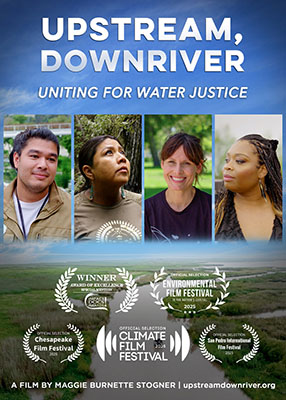
Working for National Geographic was truly a dream job, she says. When she applied to the graduate program at Stanford University, she was asked where she saw herself in five years. Her reply at the time: “I want to work with Jane Goodall and Jacques Cousteau!” Her dream quickly came true: One of her first projects at National Geographic was with Goodall.
Stogner left National Geographic to start her own documentary film production company, Blue Bear Films. She worked on many large world-traveling museum exhibitions from King Tut with NatGeo to Roads of Arabia with the Smithsonian, to the Real World of Archaeology with LucasFilms, as well as other projects.
When COVID hit, she returned to her roots — environmental activism and filmmaking. She became the executive director for the Center for Environmental Filmmaking at American University, as well as a tenured professor of Film and Media Arts. She’s currently working on a spinoff of her film: short profiles for the upcoming “Upstream, Downriver YouTube Channel”. In a full-circle way, these will feature women water activists (or “Women Water Warriors”) to reach an expanded audience. Though documentary filmmaking has its uncertainties, she remains deeply committed to the field.
“Documentary, it’s not an easy path. The funding is always difficult,” she said. “But I really, really enjoy the people I meet. They’re passionate, and they’re trying to make a difference in the world. It inspires me every day.”
More information about the School of Cinema can be found online.
Related News